
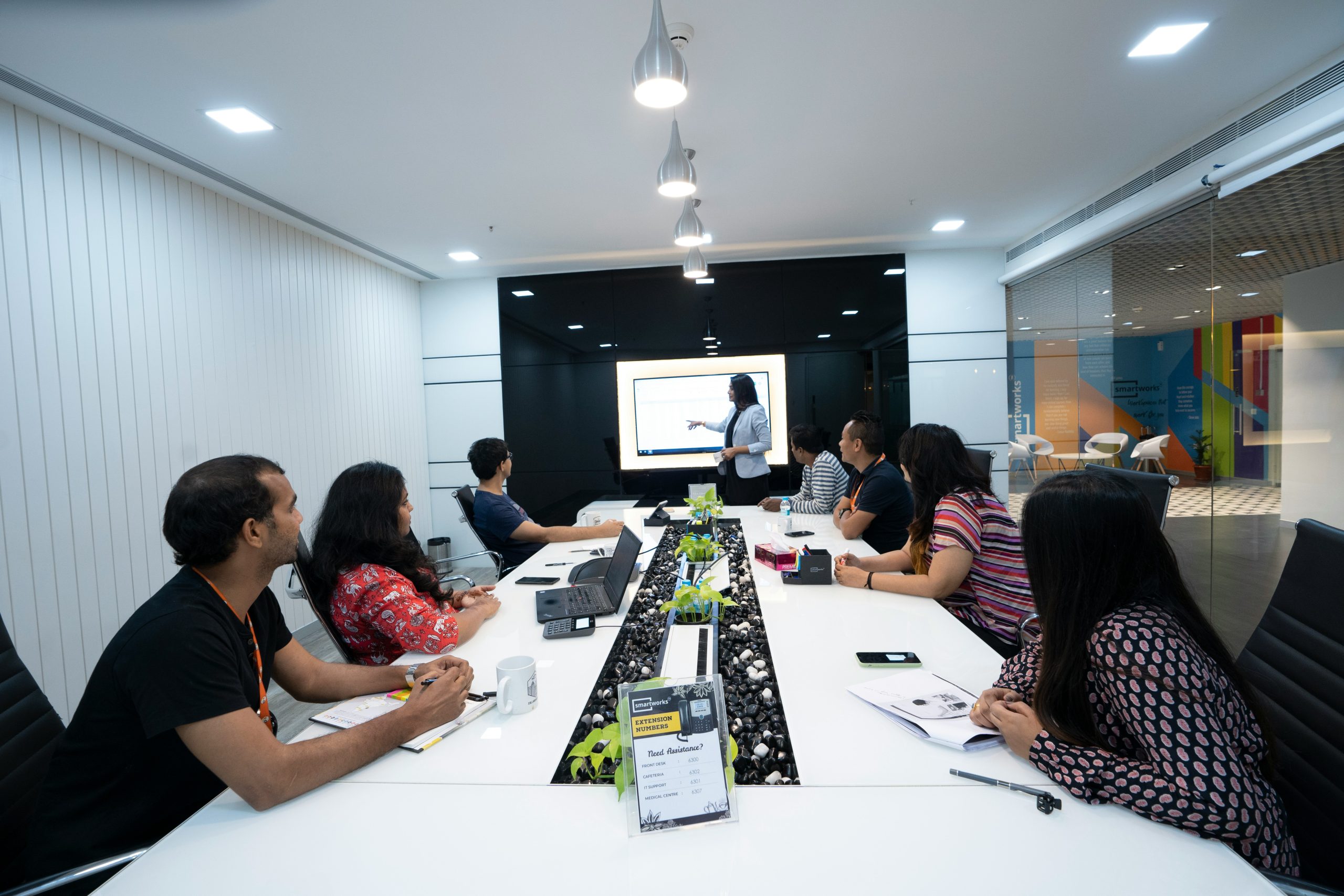
The office unit market in the UK has changed significantly over the past few years. Of course, there have always been changes – often along the lines of the available technology – but in the past few years, we have been undergoing more drastic changes that are impacting the very existence of offices, in a similar way to when offices came into the mainstream as a place of work.
In the past few years, we have seen a perfect storm of several factors, such as the COVID pandemic, rising commuting and real estate costs, and technological advancements, meaning that businesses are having to adapt to a higher number of people looking to work from home for some or all of their time working. There are, of course, a number of pros and cons to either working fully from home or in an office unit, and this is why many businesses and their staff have settled for a more hybrid working model.
There is, of course, a great deal of variation between different areas of business that use office units, as well as in different geographical locations.
In this article, we are going to take a look at how the UK Office market is looking at the moment, amongst the changes that we are undergoing at the moment.
Stabilised Market
Compared to the past few years, the office unit market in the UK has somewhat stabilised. The concept of working from home was becoming increasingly popular before COVID, but once the pandemic hit, the country needed to adapt, and we saw most businesses pushing the idea of home working, and technology businesses pushing the technology that was needed to make that happen.
Research shows that about 66% of the current office-based workforce in the UK work in a hybrid model, with workers spending some time working a proportion of their time in the office, and a proportion working remotely (most commonly at home). After the ups and downs of the past few years, it is looking to be that this percentage is set to stabilise. Businesses and employees are understanding how a hybrid approach can be the most beneficial option for everyone.
Impact of Hybrid Working
The longer-term impact of hybrid working is many-fold. Compared to the more traditional offices, they are now more focused on collaborative working – this could be through a greater number of meeting rooms as opposed to smaller offices, and/or the incorporation of collaborative technology, for example.
Another is that businesses need to make going into the office more enticing to their staff. This means that factors such as location and amenities come into play. They are looking for the most accessible locations – ones in attractive areas in thriving cities, or close to relevant talent pools, for example. We are seeing increased demand for office units in the UK’s biggest cities, but also close to areas with excellent transport links, whether it is by car or public transport.
The central London commercial unit market is booming, for example, and outshining many other European cities. Other major cities in the UK also have booming commercial unit markets.
Another is amenities – whether businesses are based in a commercial unit in a city centre or business park, amenities such as good parking, gyms, cafes, kitchen facilities, and chillout rooms – as well as excellent green credentials are important. Essentially, businesses seem to be reducing their desk counts but spending on the quality of the commercial unit that they are renting.
For business parks, the most in-demand commercial units are those that are located in places with excellent transport links, such as those that have good motorway access and public transport links (such as railway stations). They also have good food and drink options (an issue that has been obvious in business parks for decades), as well as wellness facilities such as gyms, parks, and green spaces.
Businesses are also increasingly looking for the sustainable buildings, such as those providing low energy costs, low-carbon buildings, and good air quality, as well as commercial units that are flexible in terms of floor space and the ability for businesses to portray their own identity through their office unit.
Management
Another growing factor in the success of a commercial office unit, perhaps unsurprisingly, due to changes in demand, is the unit’s management or landlord. Businesses are increasingly looking for good standards of upkeep and management, and more flexibility in terms of what they can do with the building. For many businesses, choosing a commercial unit with owners and landlords that are looking to continue to invest, work with their tenants, and are fair and communicate well, is increasingly important.
They are also looking for units with the ability to use smart technology, as well as meeting their green and ESG requirements.
Regulations Raising Standards
The government is raising the standards of the basic levels that commercial units need to meet before they can be rented as a commercial unit.
Some of these include the raising of energy-efficiency standards before businesses can rent a commercial unit, as well as during the lease term, and regulations on the raising of the rent charged.
This is all likely to increase the engagement between landlords and their commercial units, as well as push up the general standard of office units to rent, which will end up being at a higher quality, even for the least expensive units.
Refurbishments and Retrofits
Research shows that the majority of commercial office units are being refurbished or retrofitted by landlords to raise their quality, instead of buying new ones. This is likely to be due to financial reasons; perhaps it is less expensive than selling and buying a new commercial unit. However, it could also be because older commercial units that do not meet minimum levels would be rendered useless without retrofitting or refurbishment. In addition to this, iconic buildings, or just those that make-up a general look of a town or city, form part of the character of a place, and it is less desirable to demolish and rebuild.
Final Thoughts
The office unit market in the UK is changing, but it is also improving. As businesses increasingly embrace hybrid working, the office unit needs to be as attractive, or more attractive than being at home, for employees.
This comes through a number of factors, such as the amenities available to tenants, but also through green credentials and the unit’s location. Businesses are also spending a little more per desk, and this is reflected through their raised expectations – again in the location of the unit, its amenities, green credentials, and landlord/tenant relationships and investment.
If you have a commercial unit that you are looking to rent, take a look at how to list your unit here.
If you are a business looking for a new commercial unit, here at Boxpod, we can help you to find your next base.
So why not take a look at our website today?